
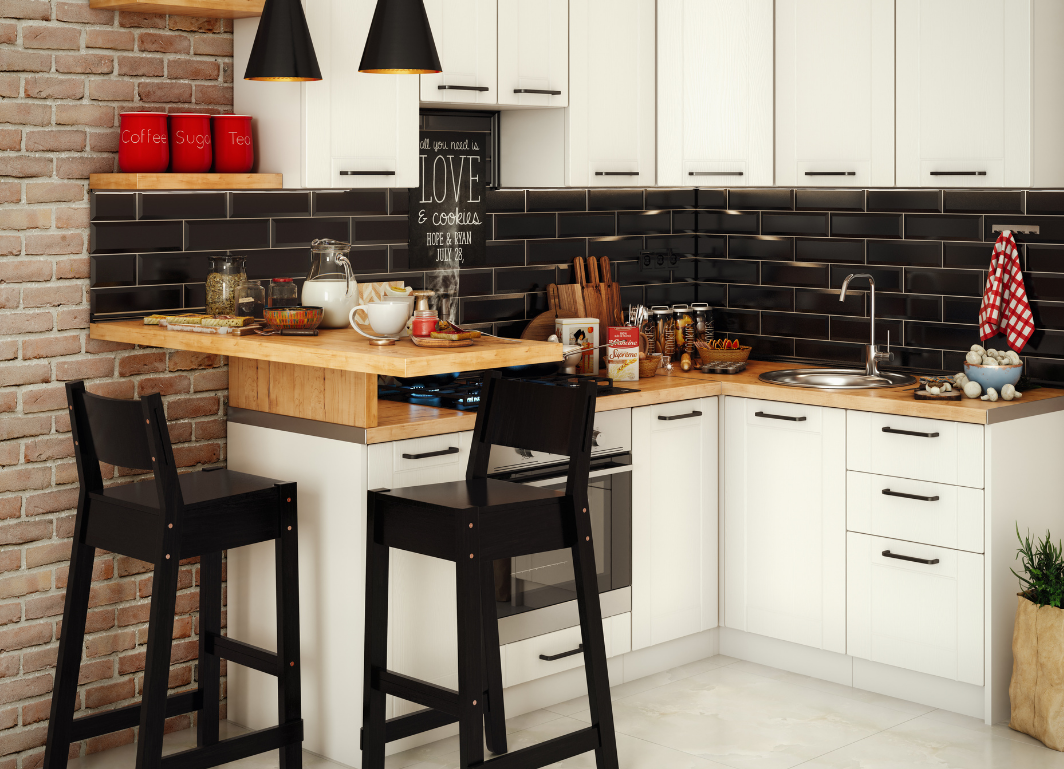
The single most common question we get on a first visit, after cost, is: "how long will we be without a kitchen?" The honest answer comes in two parts, total project length (from sign-off to handover) and disruptive on-site length (when the kitchen is actually out of action). Those are different numbers, and confusing them is what makes people think kitchens take forever.
Total project length
A typical kitchen with an expert kitchen fitter project in Glasgow runs 8 to 12 weeks from the day you sign off the final design and pay the deposit. That breaks down roughly:
- Weeks 1–6: Cabinetry manufacture and ordering. The kitchen is being built off-site. Nothing in your home changes. You're still cooking normally.
- Weeks 6–7: Pre-install survey and final scheduling. A fitter visit confirms measurements, trades are scheduled.
- Weeks 7–10 (varies): On-site installation. The disruptive part.
On-site time by project type
The actual time your kitchen is out of action depends on scope:
- Like-for-like refit (no walls moved): 2 to 3 weeks. Strip-out and first fix days 1–3, units days 4–7, worktop templated around day 6 and fitted around day 11, appliances and second fix days 12–14, snag and clean day 15.
- Reconfiguration (internal walls moved, new layout): 3 to 5 weeks. Add a week to a week and a half for structural work, plaster-drying time and additional electrical first fix.
- Full extension or knock-through to a new room: 6 weeks plus, often longer. The build itself drives the schedule; the kitchen install happens at the end.
- Tenement-flat refits: typically 2 to 3 weeks, but allow for stair-carry days and waste-removal scheduling.
The worktop templating gap
Stone and quartz worktops can't be measured from drawings, they have to be templated after the units are physically installed, then manufactured offline. That adds a 7–10 working day gap halfway through the install. We design the schedule so the kitchen is still usable during that window: temporary timber tops, working hob and sink where possible. It's not glamorous, but you can still cook.
What slows projects down
The two biggest causes of timeline drift are entirely avoidable:
- Changing the design after sign-off. A change to a single cabinet specification can push the manufacturing slot back by 3–4 weeks. We over-communicate during design for exactly this reason.
- Discovering issues at strip-out. Damp behind old units, asbestos in 1970s tile adhesive, a boiler that turns out to be on borrowed time. A proper pre-install survey finds 80% of these, the other 20% we design and install as they come up.
Lead-time realities by season
Cabinetry lead times vary through the year. January–March and September–November are the busiest periods for kitchen ordering in the UK; expect manufacturing slots to be 5–7 weeks out rather than 4. April–August and December typically run shorter. If you have a non-negotiable target date (a family event, a relocation), bring it up at design stage and we'll plan backwards from it.
What to do next
Read our day-by-day fitting process guide to see exactly what happens during each phase. If you're trying to plan around a specific date, Christmas, a baby, a wedding request a free quote and we'll work the schedule backwards from it.